
How Acumen School Fosters Independent Thinking and Creativity in Young Children
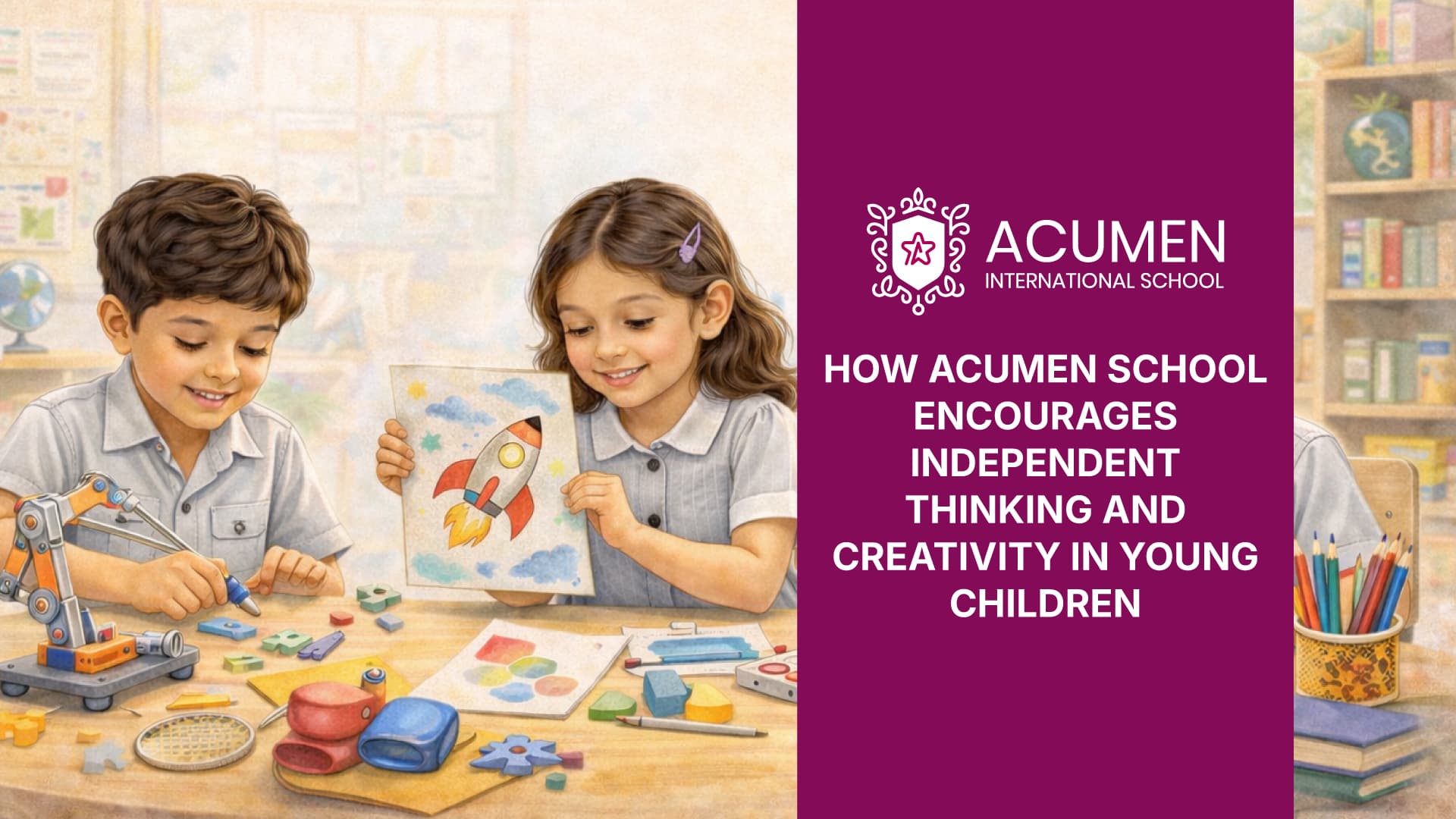
How Acumen School Encourages Independent Thinking and Creativity in Young Children?
There’s a certain calmness in how learning unfolds at Acumen International School. It doesn’t feel hurried, and it doesn’t feel like children are being pushed from one task to another. Instead, things seem to move in a way that gives children time to notice, to ask, and to think. We at Acumen International School often see that when children are given even a little space, they begin to form their own ideas. It doesn’t happen loudly. It happens in small, quiet moments when a child pauses and wonders about something without being immediately guided. That’s often where independent thinking in children begins, not through instruction, but through curiosity that is allowed to exist.
Letting Curiosity Take Its Time
In the early years, curiosity didn't follow a fixed path. A child may suddenly become interested in something simple, like how plants grow or why the sky changes colour. These moments can easily be overlooked if everything is tightly planned. We at Acumen International School try not to rush past these questions. Our Early Learning program is designed to allow curiosity to stay a little longer. By combining play-based learning with gentle structure, children begin to learn ideas at their own pace. This is often when young children's creativity begins to show. Not in perfect drawings or completed tasks, but in the way they think, question, and imagine without any reservations.
Learning That Feels Real
There’s a difference between hearing something and experiencing it. Kids learn best when they can see, touch, and try things on their own. We at Acumen International School place a strong focus on learning through experience. Whether it’s stepping into outdoor spaces, exploring nature, or working on simple projects, children begin to connect ideas with real life. In these moments, independent thinking activities happen naturally. A child observing a plant doesn’t just learn its name. They notice changes, make guesses, and slowly build understanding in their own way. It’s not about getting everything right. It’s about being part of the process.
Finding A Balance That Works
Structure is still important, and it is very much present. Children are introduced to language, numbers, and foundational concepts in a clear and thoughtful way. But we at Acumen International School try to ensure that the structure does not take away the child’s voice. Teachers guide, but they also step back when needed. This allows children to understand what they’ve learned rather than just repeating it. That balance between guidance and freedom is not always easy to create, but it makes a difference. It helps children gradually trust their own thoughts rather than always waiting for the “right” answer.
Confidence That Grows Quietly
Confidence does not come from great accomplishments in the early years. Confidence develops gradually, through small experiences that accumulate over the years. We at Acumen International School observe small moments in a child’s life. A child feels heard when he/she shares an idea. A child feels comfortable when he/she attempts something new without being corrected. These small moments help build a child’s self-image. This is also linked to the importance of creativity in young children. If a child feels comfortable expressing himself/herself, then it is a normal part of their thinking.
Learning Beyond The Classroom
As children grow, learning begins to connect across different areas. It is no longer just about subjects, but about understanding how ideas relate to each other. We at Acumen International School encourage this through projects, collaboration, and real-world exploration. Children start to see how science, language, and mathematics come together in everyday situations. This is where children's independent thinking becomes more visible. They start to think more deeply, to look at things from different angles, and to come up with their own ways of seeing. It doesn’t always look perfect, but it feels meaningful.
The Role Of Space And Surroundings
The space around the child also subtly influences their thinking and behaviour. Spaces that feel open and flexible can encourage children to learn. We at Acumen International School have created spaces that extend beyond traditional classrooms. Outdoor areas, gardens, and creative spaces become part of everyday learning. When children move through these environments, they begin to notice things on their own. This naturally supports creativity in young children, not as an activity, but as a way of seeing and experiencing the world.
Feeling Safe Enough To Try
Learning is closely connected to how a child feels. If a child feels unsure or unheard, they are less likely to take small risks in thinking. We at Acumen International School place importance on emotional well-being alongside academics. With the support of educators and child psychologists, children are encouraged to express themselves and feel understood. This sense of safety allows them to try, make mistakes, and try again. Without that pressure, learning becomes more natural and less forced.
A Day That Feels Complete
A typical day here doesn’t feel overloaded. There is time for learning, time for play, and time for reflection. We at Acumen International School aim to create a rhythm in which children experience different kinds of learning without feeling overwhelmed. They move between activities that engage their minds, their creativity, and their interactions with others. In this flow, independent thinking activities are not something separate. They become part of how children learn every day.
Final Thoughts
Understanding how children learn to think independently is not always simple. It doesn’t come from a single method or lesson. We at Acumen International School see it as a collection of small, thoughtful choices, allowing questions, giving time, creating space for exploration, and supporting both emotional and academic growth. When these things come together, children slowly begin to think for themselves. They become more curious, more confident, and more comfortable with their own ideas. And over time, that stays with them. Not just in school, but in how they approach the world around them.