
The Importance of Early Education and Primary Years in Shaping Strong Learning Foundations
The Importance of Early Education and Primary Years in Shaping Strong Learning Foundations
People often talk about learning as something that starts when real school begins. But learning seems to begin much earlier than that, in ways that are easy to miss. A child stacking blocks or asking endless questions is already building something like a foundation. Not a visible one, but something underneath everything that comes later. That quiet base is where the importance of early education starts to make sense. It is less about memorizing things and more about getting used to the idea that the world is understandable. A child begins to notice patterns, sounds, shapes, and reactions. Slowly, learning stops feeling strange and starts feeling normal. Without that early comfort, school can feel like being dropped into the middle of a conversation that started long ago.
Small Years That Shape Big Habits
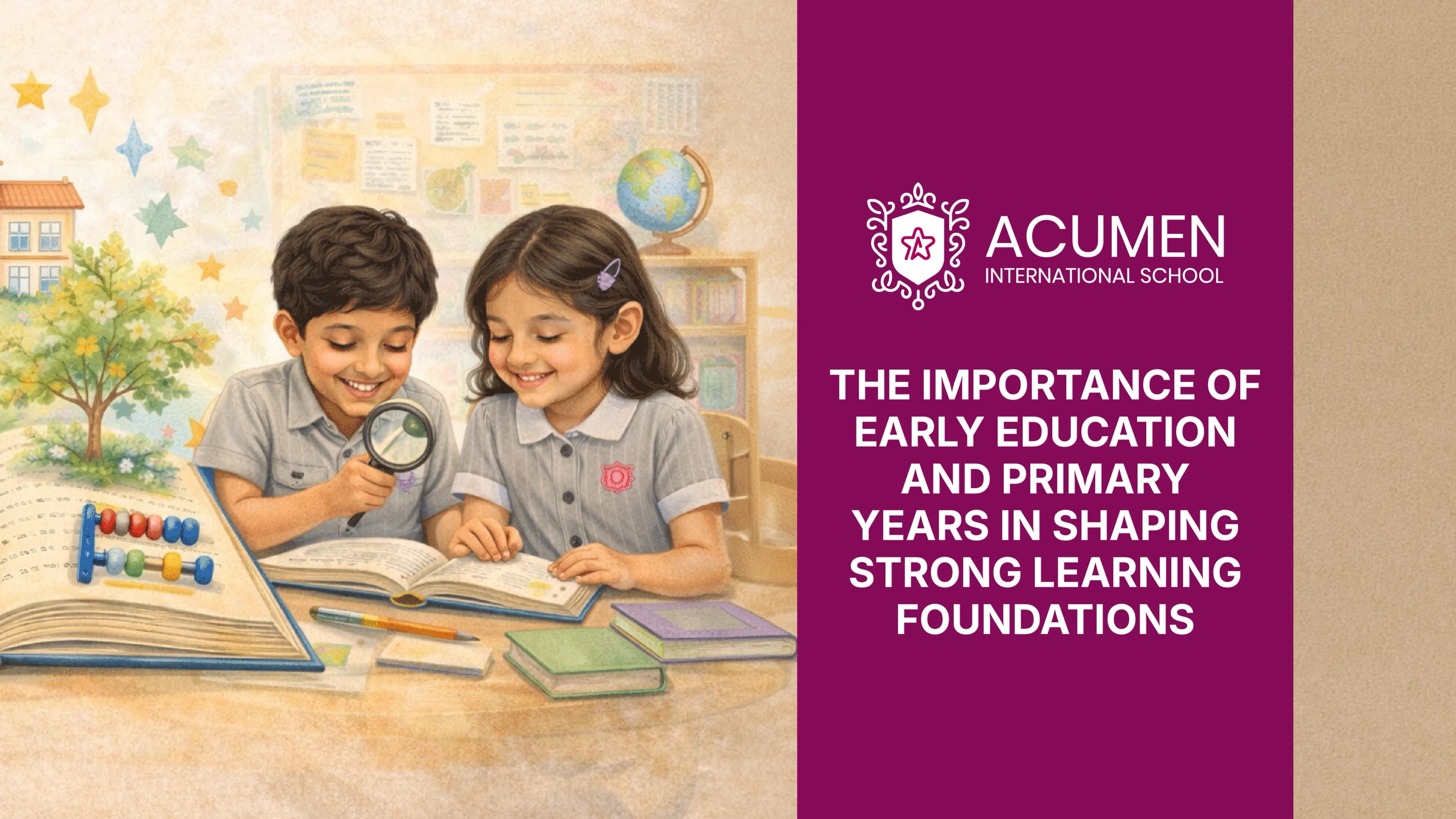
The early years are short, but they seem to stretch far into the future. A child who learns to sit with a puzzle for ten minutes is not just passing time. Something is forming there, something about patience and focus that may show up years later during homework or reading. This is where the importance of early childhood education quietly shows itself. It is not always dramatic or easy to measure. Sometimes it looks like singing songs or sharing crayons. But underneath those small activities, children are learning how to wait, how to listen, and how to try again after getting something wrong. Those habits tend to stay. Not perfectly, of course, but enough to matter. At Acumen International School, we see these early habits grow every day through meaningful routines and guided play, shaping confidence and independence in young learners. Student life here is designed to help children build patience and focus in ways that feel natural and joyful.
More Than Just Letters And Numbers
It is easy to assume early schooling is mostly about alphabets and counting. Those things matter, but they are only part of the picture. Children are also learning how to speak clearly, how to express frustration without giving up, and how to exist around other children. The importance of pre-primary education often lives in these quieter lessons. A child learns that questions are allowed, that mistakes are survivable, that sometimes another child gets the toy first, and that is somehow manageable. These are small realisations, but they make later learning feel less overwhelming. School stops being a place of pressure and becomes a place that feels at least a little familiar.
The Quiet Role Of Good Schools
Not all early learning happens at home, and not all schools approach these years the same way. Some places seem to understand that young children need time and patience as much as they need instruction. In places like an international primary school in Mokila, Kondakal, the environment often tries to balance structure with space to understand. There is usually an effort to make learning feel natural instead of forced. That balance can make a difference, especially in the early years when children are still deciding how they feel about school itself. A calm classroom, a patient teacher, and predictable routines can turn uncertainty into confidence, though it may happen so gradually that no one notices right away.
Why These Years Stay With Us
Early learning does not solve everything. Some children struggle later no matter how strong the start was. Others catch up even if the beginning was uneven. Still, those early years seem to leave a mark. The importance of early education becomes clearer when thinking about how people approach new challenges. Some hesitate immediately, while others try first and worry later. That difference often traces back to early experiences with learning, whether those experiences felt safe or stressful. It is not about creating perfect students. It is more about helping children feel that learning is something they can handle.
A Place Where Young Minds Grow with Confidence
At Acumen International School, we believe learning should feel natural, engaging, and meaningful from the very beginning. Our vision is to inspire children to learn, lead, and shape a better future, and we bring that to life through an inclusive environment where every child’s individuality is recognised. Through strong values like curiosity, integrity, and resilience, we guide children to grow not only academically but personally. Student life at Acumen International School is filled with opportunities to know, question, and create, whether inside bright, flexible classrooms or in outdoor spaces designed for discovery. We keep our student–teacher ratios low so every learner receives personal attention and encouragement. Our approach blends structured learning with creativity, helping children build strong foundations in literacy, numeracy, and critical thinking. We also nurture confidence and compassion, ensuring children feel safe, supported, and excited to come to school each day while developing skills that stay with them for years.
The early years pass quickly, almost quietly, and it is easy to underestimate them. Nothing dramatic seems to happen day to day. Just small lessons, small routines, and small questions. But those small things gather into something larger over time. A child who feels comfortable learning early on often carries that feeling forward, even when school becomes difficult. That is why the importance of early childhood education and the importance of pre-primary education continue to come up in conversations about learning. Not because they guarantee success, but because they make the road ahead feel a little less uncertain. And sometimes, that is enough to make a real difference.
Frequently Asked Questions
Early education builds curiosity, confidence, language skills, and social understanding, helping children approach later learning with confusion or fear reduced.
Primary education gives structure, basic literacy, numeracy, and thinking habits, forming a steady base for future learning and everyday decision-making.
Early care and education support emotional security, communication skills, and healthy routines, allowing children to grow into more independent learners.