
What Is an International Curriculum and Why Does It Matter?
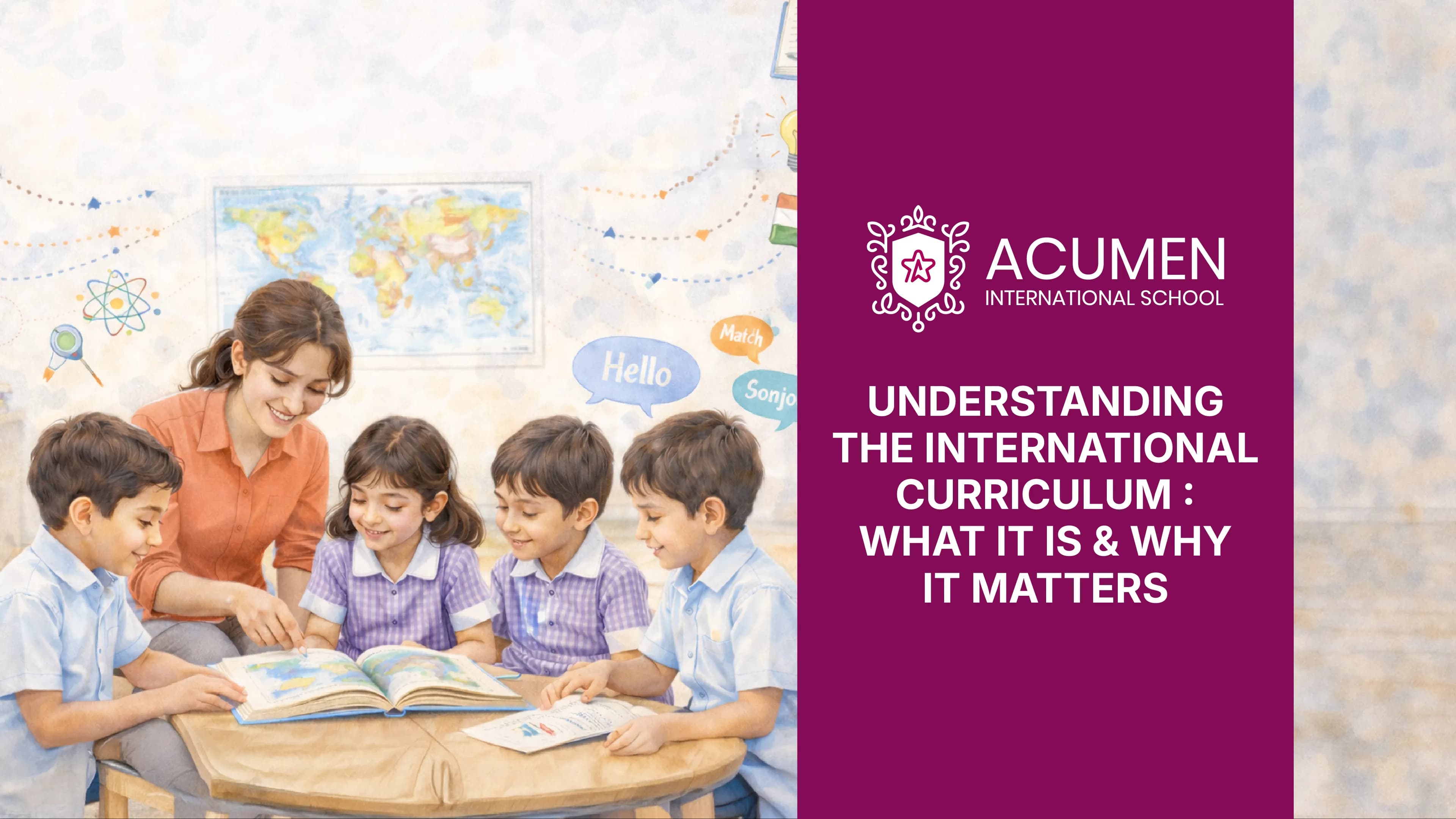
In the modern world, education is changing rapidly as parents look for a learning system that not only helps their children pass examinations but also equips them for life. The international curriculum exists to teach students essential life skills through an educational system that aims to create all-around development for students. This learning method enables students to develop their own knowledge through active exploration and connection building, instead of following fixed learning paths, which require them to memorize specific information. An international curriculum establishes its foundation on the principle that students achieve optimal learning outcomes through active participation in educational activities, which require students to apply their knowledge to actual situations. The educational philosophy develops through the understanding that students need to learn outside school environments, which enables them to practice their conceptual knowledge through actual life experiences.
The international curriculum includes flexibility as one of its fundamental components. The program enables children to learn according to their developmental stage instead of applying a uniform academic standard to all students. The educational system uses subject integration to help students understand the relationships between different academic fields. The approach provides children with outdoor learning opportunities through project-based exploration activities and hands-on experiences to improve their material understanding. The world around them enables children to develop both curiosity and responsibility skills. Students learn essential life skills through classroom learning, which enables them to observe and explore the world while developing essential life skills.
The Core Philosophy of an International Curriculum
The international curriculum develops the complete child by providing academic learning, personal development, social development, and emotional development. The curriculum monitors the progress of the students based on their learning path rather than the result. The program helps children build critical thinking skills, self-confidence, and collaboration skills. The teaching approach applies inquiry approaches, reflection approaches, and exploration approaches to enable children to grasp concepts in a manner that is deeper than basic knowledge. The approach assists children who have participated in outdoor educational activities because it demonstrates that learning occurs in both indoor and outdoor settings.
The normal school day has been supplemented with outdoor activities that allow students to discover nature while engaging in physical activities and applying theoretical knowledge through practical approaches. The program generates cognitive development through its activities, which create better environments for students to concentrate and maintain their emotional balance, and build social relationships. Outdoor learning activities, like sports, are the primary means by which children learn to understand and retain their academic work. The international curriculum recognizes the importance of these activities because they help children to become independent and problem-solve, as well as creative thinkers, skills that children need throughout their lives.
Learning Beyond Classrooms in Everyday Education
The international curriculum establishes its most important foundation through educational activities that take place outside of school. The children are encouraged to discover new concepts by observing their surroundings, conducting experiments, and interacting with their surroundings. Children need this learning method because it shows them how their studies connect to real-world situations. The teachers plan their lessons to include activities which allow students to learn through physical movement, group talks, and actual life situations. The method enables students to connect with their studies at a deeper level while they maintain their understanding of what they have learned.
The process of learning for children is greatly enhanced by the incorporation of outdoor learning. Outdoor activities for children in school help them develop their physical coordination, teamwork, and environmental appreciation. The open space learning method helps the students develop their inquisitiveness while at the same time reducing their stress levels, thus providing a comprehensive and enjoyable learning experience. Outdoor education for children helps the students develop their confidence as they learn to cope with different situations in life. The experience gained from the activities helps the students in their classwork while also developing a more dedicated attitude towards their learning.
How Outdoor Learning Supports Holistic Development
Students acquire knowledge through outdoor educational activities, which take place during their playtime and all other school periods. The program uses a structured method to teach students essential skills that will support their academic and personal development. Outdoor school activities enable students to use their complete sensory capabilities, which results in improved learning and memory retention for them. Physical exercise promotes brain growth, whereas natural environments help people reach their emotional equilibrium. The combination of these elements establishes the necessary base for students to learn all academic disciplines.
Outdoor learning promotes social interaction and collaboration among children. Children can communicate and work together to achieve a common goal. Such activities enable the children to be empathetic and develop leadership skills. At the same time, the children can build their self-confidence. An international curriculum recognizes that these are equally important as academic achievement. Such a combination of outdoor learning and traditional academic learning helps the children build the necessary skills that they need for future success.
Comparison With Traditional Curriculum Structures
An international curriculum is very different from other conventional academic systems that emphasize examinations. In conventional academic systems, there is often emphasis on the delivery of content and results. Equal emphasis is given to the learning process in the international curriculum. Children are encouraged to think critically about concepts rather than memorize facts to pass exams. In this way, the educational needs of the children can be catered to.
Learning outside the classroom is often restricted in conventional academic systems. In conventional systems, children are often restricted to textbook knowledge. In the international curriculum, experiential learning and outdoor activities in schools are regarded as important for the development of children. The outdoor activities that designers create for children to use as educational tools help children to develop their inquiry-based learning skills, their ability to think creatively, and their emotional growth. The program helps children to develop flexibility skills, together with global awareness skills, which they need for today's fast-changing world.
Why Families Choose an International Curriculum
Families choose international educational programs because these programs help children develop fully while they learn to understand the world. The international curriculum enables children to think independently and express themselves correctly while developing skills that allow them to succeed in any situation. The curriculum includes outdoor learning activities for children and project-based learning activities. These skills are not only useful in a university setting but also in a child's life.
Another factor that makes international education appealing to families is its holistic nature. The curriculum offers a balance between academic learning and other activities. The activities include physical activities, creative activities, and emotional learning. The outdoor activities provided in schools enable children to recharge mentally and physically while learning. Learning outside a classroom setting makes a child's educational journey a fun and interesting experience.
How We Implement the International Curriculum
At Acumen International School, we follow the international curriculum with a focus on experiential learning and child-centric education. The most effective way for children to learn is to participate in the learning process, which will allow them to explore their surroundings. Our learning style is also helpful for learning outside the classroom through well-designed outdoor activities in schools. We utilize outdoor spaces as learning environments to foster children's natural curiosity and their ability to explore the world as they develop their full range of skills. Our international curriculum design uses best educational practices to create learning experiences that help children develop into responsible and self-assured learners through inquiry-based and creative learning activities.
International curricula function as academic frameworks while they establish comprehensive educational systems that promote all aspects of student development. The curriculum creates educational value through the learning that takes place in the classroom and the outdoor educational activities. The hands-on experiences assist the students in developing skills for the complex world. The children who take part in the outdoor activities of the outdoor school emerge as resilient and creative children while retaining their interest in learning. Education that encompasses the different facets of the child provides the foundation for the attainment of academic success.
Frequently Asked Questions
An international curriculum establishes educational standards that enable students to reach their maximum potential through an educational system based on investigative learning. The curriculum helps children learn through hands-on activities, which create lasting memories because they are studied through traditional methods.
The international curriculum enables students to gain knowledge through practical experiences, while the CBSE curriculum directs students to follow specific study paths, which result in examination success. The international curriculum puts more emphasis on learning outside the classroom.
The international curriculum serves parents who desire their children to become creative thinkers, critical thinkers, and international citizens. The curriculum will be effective for children who learn by experiencing real-life situations.
Yes, the international curriculum helps children develop their whole potential since it involves academic learning, outdoor activities, physical development, emotional development, and social development.