
Fun Summer Activities and Skill-Building Ideas for Students
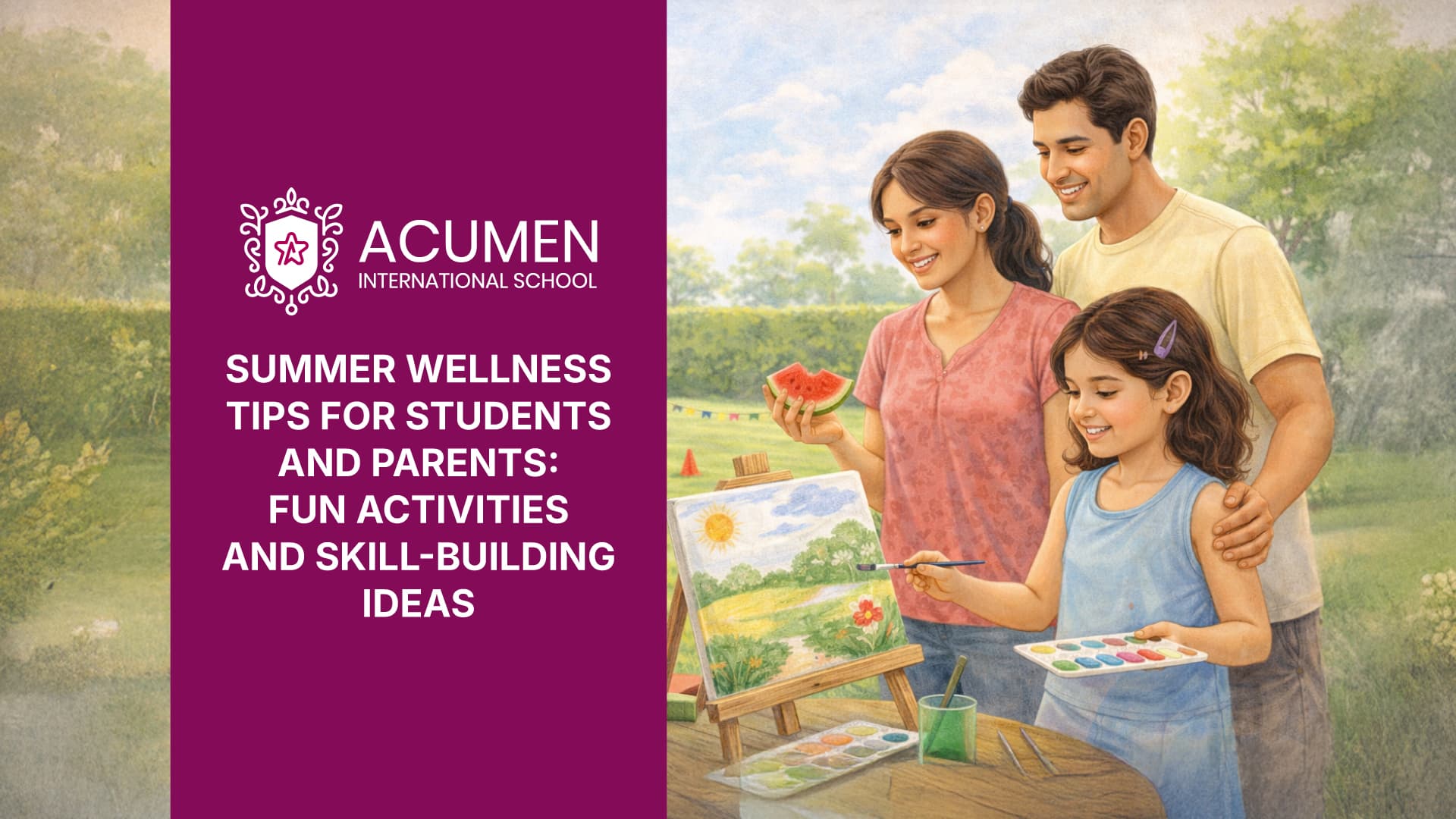
Summer Wellness Tips for Students and Parents: Fun Activities and Skill-Building Ideas
Summer always sounds like a relief at first: no alarms, no rushed mornings, no heavy school bags. But after a few weeks, the excitement wears off. The free time starts to feel a bit directionless. Students get restless without knowing why, and parents start wondering how to keep things balanced without turning the house into another classroom.
That’s where these summer wellness tips start to matter, though not in a strict or planned way, more like small changes that help bring some balance to the day. If you’ve been wondering how to keep summer both relaxed and meaningful, you’re not alone.
Letting Days Have Some Shape
You don’t need a strict timetable or a written schedule. Just a loose rhythm helps. Waking up at roughly the same time, eating together when possible, having a part of the day that feels “active” and another that feels slow. Without this, days start to blur. And when that happens, energy drops. Not because of tiredness, but because there’s no clear flow.
For students, especially, a bit of structure makes space for both rest and curiosity. And for parents, it takes away that constant feeling of needing to “figure out” each day from scratch. At Acumen International School, we often see how even a loose routine helps children feel more settled during holidays.
We encourage routines that are flexible yet meaningful, helping students feel secure while still leaving room for curiosity, creativity, and unstructured exploration.
Rethinking Summer Activities
When people think of summer activities for students, they often imagine camps, classes, or trips. Those are nice, but they’re not always possible, and honestly, not always needed. Sometimes it’s simpler than that. A long walk in the evening when the heat drops. Sitting together and trying to cook something new, even if it turns out a bit off. Watering plants and actually noticing how they change over weeks.
These small things don’t look like much, but they create moments where the mind slows down. And that’s something summer does well when it’s allowed to. Boredom, in small doses, can actually be useful. It pushes students to come up with their own ideas, even if it takes time. That slow process of figuring out “what now?” is part of growing, though it can be uncomfortable at first. And honestly, not every child needs a packed schedule to stay engaged.
Also read: Importance of Outdoor Learning in Children's Development
Skill Building Without Pressure
The idea of ‘summer skill-building activities’ can sometimes feel overwhelming. But it doesn’t have to be like that. Skills can grow quietly, like reading a little every day without being told what to read, trying to learn a few words of a new language just out of curiosity, or fixing something broken at home instead of replacing it. Even everyday chores can help. Cooking, organising, or fixing small things at home—these are real-life skills.
What matters is the feeling around it. If it feels forced, it won’t last. If it feels like something chosen, even loosely, it tends to stick. At Acumen International School, we believe that true learning happens when children feel free to learn without pressure. By encouraging everyday experiences like reading, creating, and problem-solving, we help students develop skills in a way that feels natural, engaging, and lasting.
Parents Figuring It Out Too
Summer isn’t just different for students. It changes things for parents as well. Routines shift, expectations shift, and there’s often this quiet pressure to “make summer meaningful.” Some summer parenting tips sound very clear on paper, but real days don’t follow neat ideas. Some days will feel productive, others won’t, and that’s probably fine. Being present matters more than planning everything perfectly.
Listening when a child talks, even if the topic feels random. Noticing when they seem unusually quiet or unusually restless. These small observations often say more than any structured activity. Sometimes, letting go of structure helps more than forcing it. Not every hour needs to be useful, not every day needs to be memorable. Sometimes just being around each other without a goal is enough.
Making Space For Rest
One thing we often overlook is what real rest actually looks like. Not just scrolling through screens or passing time, but moments where nothing is expected. This can look different for everyone. Sitting by a window during the afternoon heat. Lying down with music playing softly. Even just doing nothing for a while without feeling guilty about it.
Students carry more mental load than we realise. Summer gives them a chance to release some of it. Parents, too, though it’s harder to admit sometimes. Rest isn’t wasted time here. It’s part of what makes the more active moments feel better.
Where Young Minds Grow with Confidence and Care
In environments where children feel supported, learning naturally becomes more engaging. We work closely with experienced educators and child psychologists to understand how each child grows, thinks, and feels. Our classrooms blend CBSE and international approaches in a way that feels natural, not overwhelming.
From Pre-Nursery to Grade V, we focus on building strong foundations through hands-on experiences, gentle guidance, and real interactions. Children here don’t just learn concepts, they begin to ask questions, express themselves, and develop confidence at their own pace in an environment that feels safe, engaging, and genuinely supportive.
Final Thoughts
By the end of summer, you may notice small but meaningful changes. It’s not always obvious. Maybe a student feels a bit more independent. Maybe a parent feels less rushed. Maybe the house just feels a little calmer. These changes don’t come from big plans. They come from the small, repeated moments that shape the days.
So maybe the idea isn’t to “use” summer in the best way, maybe it’s just to move through it with a bit more awareness. Let some days be slow, let some be full, and not worry too much about balancing it perfectly. That seems to be where both wellness and growth quietly meet. And often, that’s what a good summer looks like—not perfectly planned, but quietly meaningful.