
Why Small Class Sizes Matter at Acumen International School
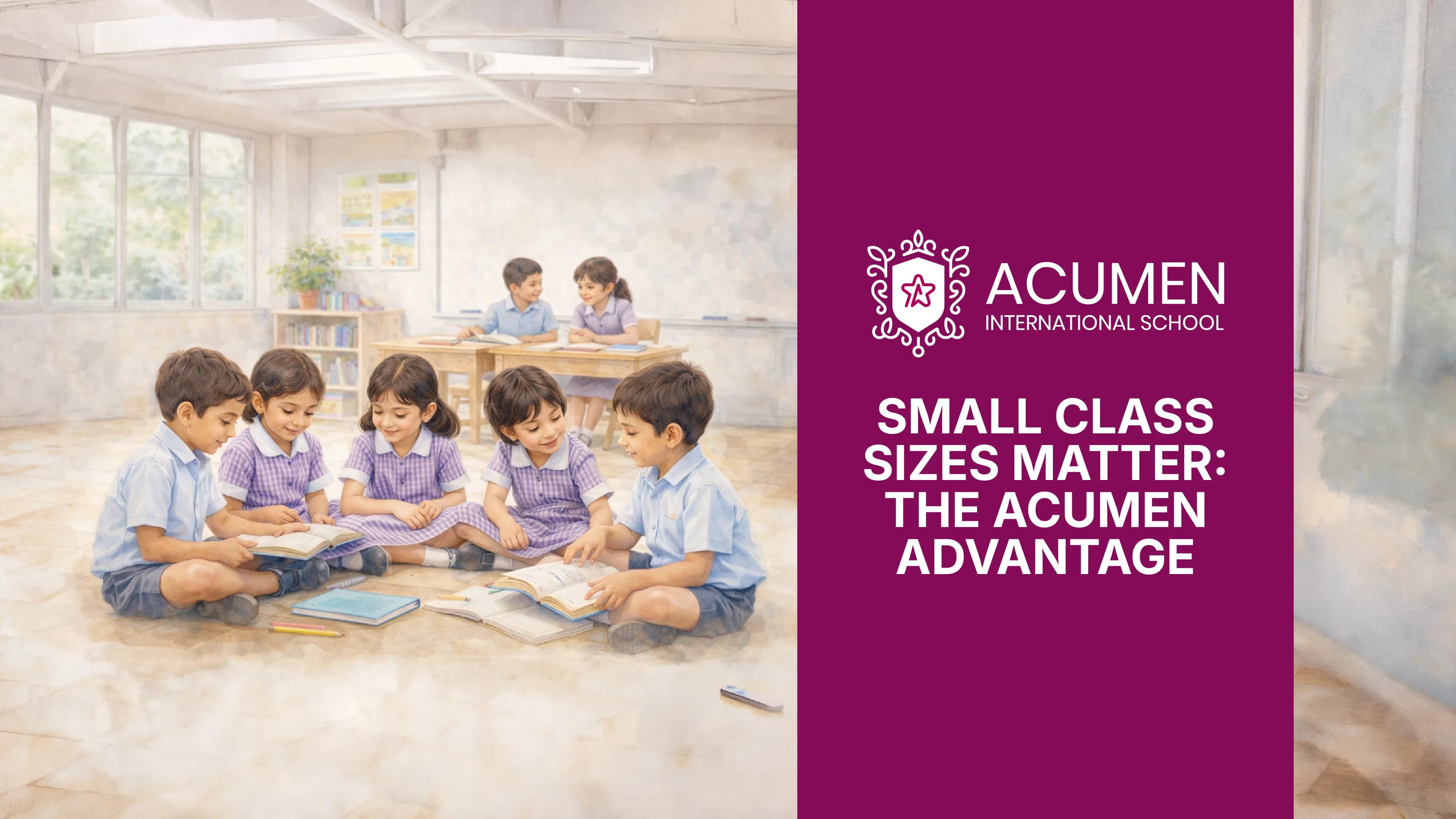
The early years of education serve as a critical period that determines how a child develops their self-assurance and exploration skills and their capacity to learn throughout life. The current school selection process has evolved for most families because they now prioritize understanding student support systems instead of academic performance. The implementation of small class sizes in educational institutions has become essential for providing effective early educational programs that specifically benefit children during their pre-primary and primary school periods. Acumen International School established its teaching methods based on this educational philosophy. Acumen operates as a Best Pre-primary International School while serving as a Primary School in Mokila, Kondakal to provide students with the necessary space and instruction, which enables their individual educational development. The educational institution promotes active student participation through its decision to maintain small class sizes, which creates an environment that fosters direct student engagement.
The parents of today have learned that educational success depends on teachers' ability to build relationships with each student in their classrooms. The advantages of small class sizes go beyond better academic performance to deliver emotional safety, enhanced social skills, and stronger social development. The educational structure of Acumen demonstrates its implementation through international teaching standards, together with personalized student learning pathways. The school maintains small class sizes, which enable teachers to provide students with personalized instruction while addressing their special educational requirements through tailored learning methods. The organized environment delivers essential educational resources and emotional support to students, which enables them to build self-assurance as their key resource for achieving academic success.
Why Small Class Sizes in Schools Make a Lasting Difference
The learning requirements of students in small classrooms should be handled by teachers through personalized teaching methods instead of using standard teaching methods. The teacher in a small classroom can observe students better, which helps him to see what they do well and which areas need extra support. The need for the observation method in students arises because their basic methods of learning and interaction have already been experienced in their early childhood education. Children are comfortable when it comes to asking questions, sharing ideas, and even participating in class discussions, as they know they are being heard.
The small class sizes at Acumen International School provide a conducive learning environment for the students. Through dedicated time with students, teachers deliver their positive evaluation together with their educational support throughout the entire learning period. The approach enables children to build essential skills, which include language skills, mathematical abilities, and problem-solving expertise. Parents often notice that children in smaller classes show greater enthusiasm for learning and are more confident in expressing themselves. The advantages of small class sizes provide evidence for their long-term advantages, which schools experience especially during their initial educational phase.
The Acumen Philosophy in Pre-Primary Education
Early childhood education is about much more than introducing letters and numbers. The Best Pre-primary International School Acumen uses its educational system to develop students through their particular stages of intellectual and emotional growth and their natural curiosity and creative talents. The school uses international educational frameworks and experiential learning methods to help students learn through activities that have real-world value. The learning process occurs through play, observation, and interaction while children explore under adult supervision without needing formal teaching.
The small class sizes in schools enable teachers to create tailored learning experiences that match the individual needs of students and their growth patterns. The learning program enables children to progress at their own speed which helps them build self-confidence while decreasing their stress levels. Teachers can guide children to discover concepts through gentle teaching instead of using memorization techniques. The personalized method of learning helps children develop their language skills and motor abilities and understand social situations. Families who want to find the Best Pre-primary International School will see how small class sizes benefit their children because they help them make successful transitions into formal educational settings.
Building Strong Foundations at Primary School in Mokila, Kondakal
The period after pre-primary education needs continuous teaching quality and classroom assistance for effective student learning. Acumen International School maintains its dedication to small class sizes as its core educational practice. Students have to learn various subjects through a specific educational program, but they need individualized learning assistance. The classroom size allows teachers to check if the students understand the basic concepts without the need to cover the entire course.
The advantages of small class sizes during primary education include improved student comprehension, better classroom participation, and stronger student-teacher relationships. Children feel supported when challenges arise, and they receive encouragement to develop their critical thinking skills instead of using only rote learning. The learning environment at Acumen promotes three core values, which are collaboration, communication, and responsibility, while providing teachers with space to teach students through personalized learning methods. The structured yet supportive approach enables children to acquire academic discipline while they keep their desire to learn and their excitement for studying.
Social and Emotional Growth Through Smaller Classrooms
The most important advantage that small class sizes have is that they bring a positive impact on the development of emotional and social skills in a child. Children in small classes develop stronger relationships with their friends and learn various social skills through sharing and cooperation. Teachers gain improved abilities to track student interactions while helping students navigate their social difficulties through effective guidance methods.
Small class sizes help create a calm and friendly environment where children feel safe to share their thoughts and feelings without fear of being judged. When children feel accepted and included, their confidence grows, and they become emotionally stronger. Classrooms with fewer students enable children to practice social skills because parents believe their children will have better chances to make friends with their classmates. The fundamental characteristics of basic components enable children to develop essential skills that they need for their future academic and social development.
Choosing a School That Prioritises Individual Attention
The choice of a good school depends on an understanding of how learning takes place daily. The small class sizes at the Primary School in Mokila, Kondakal and the Best Pre-primary International School provide benefits to parents who want to enroll their children. The school system will establish open communication channels that enable teachers and students to share information with parents. The students will gain advantages from the scheduled routine because it allows them to study according to their individual learning speeds.
Acumen International School must consider small class size limits as its primary requirement according to educational policy regulations. The policy establishes an all-encompassing framework that evaluates child development through academic achievements, emotional progress, and social growth. The deliberate educational strategy of a school turns education into valuable learning for parents. The educational system will create a meaningful learning experience for every student through its commitment to maintaining small class sizes.
Frequently Asked Questions
The small school systems deliver multiple advantages to their students through two specific benefits, which include teacher relationships, education support, and local community participation. The students who receive extra support from their teachers achieve better learning outcomes, while their self-worth and educational participation skills also improve.
Families choose smaller schools because teachers there can better understand each student's learning requirements. Young children need smaller school environments because these spaces help them grow both academically and emotionally through their developmental stages.
Preschool programs help children develop essential skills, which include academic learning, social interaction, and emotional growth. The program enables students to remain prepared for learning by creating an environment that helps them develop their curiosity and confidence.
Pre-primary school teaches aids in the basics of language, math skills, and social skills. The program establishes fundamental abilities that students need to succeed in their primary school journey and their continuous educational development.