
How to Know If Your Child Is Happy at School - Signs Parents Often Miss
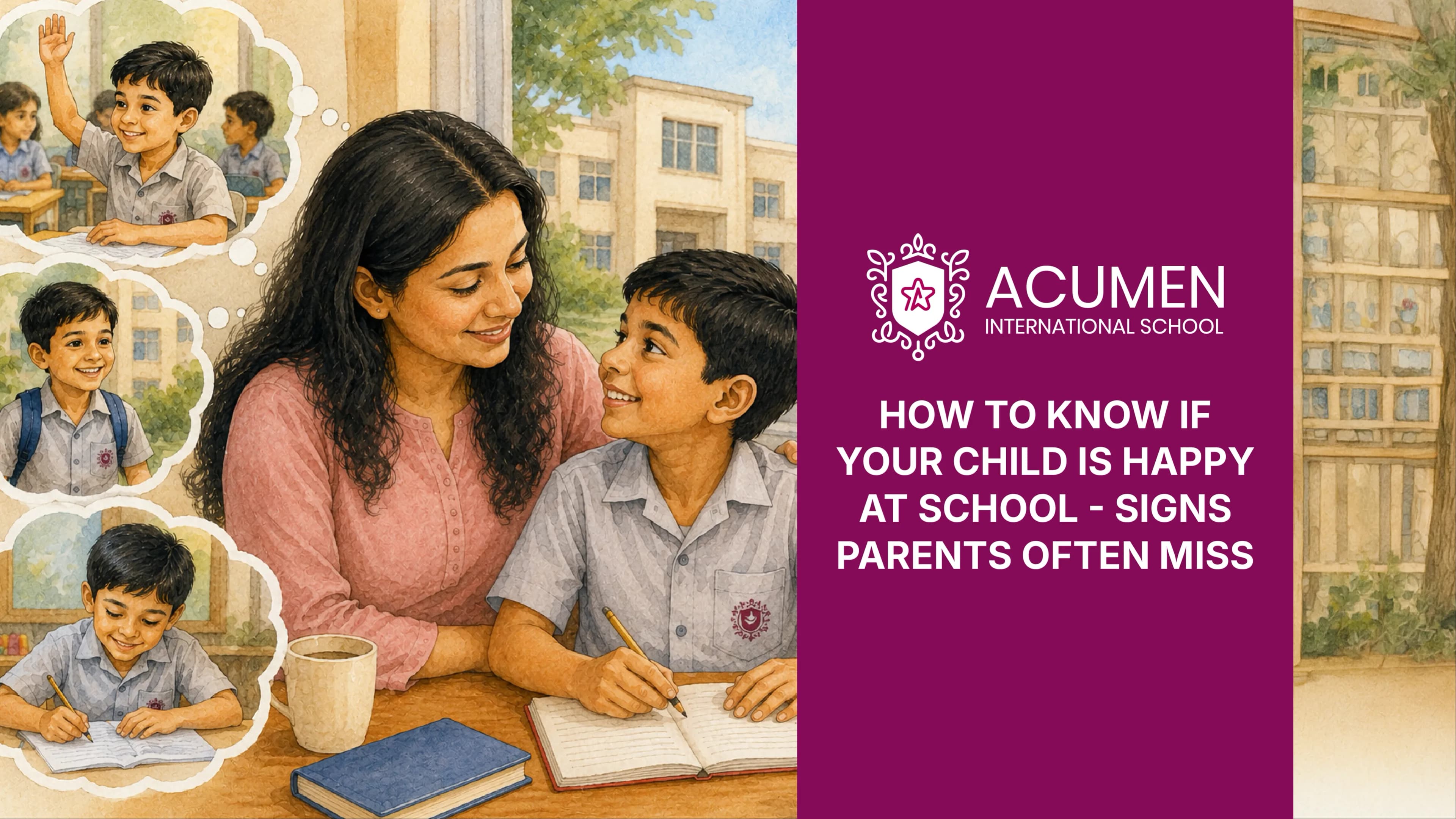
There is a question many parents ask almost every day.
"How was school?"
The answer is often a quick "good" or "fine," and then the conversation moves on to something else, like homework, dinner, or bedtime. The strange thing is that happiness at school rarely announces itself clearly. Children do not always come home saying they love where they spend most of their day. Sometimes the signs are tucked away in ordinary moments that do not seem important at first.
When Mornings Feel Ordinary
Parents tend to notice difficult mornings. Those are hard to miss. What often goes unnoticed are the ordinary ones. A child wakes up, gets dressed, looks for a missing water bottle, complains about breakfast, and heads out the door. Nothing dramatic happens. Oddly enough, that can be a good sign. School feels normal, familiar, not something that creates worry before the day has even started. Of course, everyone has mornings when they would rather stay home. Children are no exception. The pattern matters more than the occasional bad day.
The Stories That Seem Unimportant
Sometimes children reveal the most about school when they are not really trying to. A parent might hear about a funny joke from lunch break. A disagreement over a football game. A science experiment that made a mess. None of these stories sounds particularly significant. Yet children usually talk about places where they feel comfortable. When children talk about school naturally, it often means they are looking forward to it rather than just seeing it as somewhere they have to go.
Friends Have A Bigger Role Than Adults Think
Years later, many people remember the friends they made at school before they remember what they studied. That says something important. Children spend a large part of their day learning and growing alongside their peers. The feeling of belonging comes from those relationships. One good friend is often enough. Children do not need a large group to feel they belong. When they feel connected to someone, school tends to feel more positive and welcoming.
Not Every Sign Comes Through Words
Children are not always skilled at explaining emotions. Many adults struggle with that too. A child may not say they feel comfortable at school, but it shows up elsewhere. They are relaxed after coming home. They talk freely about their day. They do not seem weighed down by something they cannot quite explain. Watching behaviour often reveals things that direct questions never uncover.
The Teacher's Name Keeps Coming Up
This one is easy to miss. Some children regularly mention a teacher without their parents paying much attention to it. Perhaps they talk about something the teacher said. Perhaps they share a classroom story involving them. The details are less important than the feeling behind them. Children tend to notice adults who make them feel seen. That connection is often part of a genuinely caring school environment.
They Are Comfortable Getting Things Wrong
A child who feels secure at school usually does not spend every moment trying to avoid mistakes. They answer questions even when unsure. They attempt new activities without needing guarantees. That does not mean they enjoy being wrong; very few people do. Still, there is a difference between disliking mistakes and being afraid of them. Children often become more willing to try when they know mistakes will not define them.
Curiosity Starts Showing Up At Home
Not every child runs through the front door eager to discuss what happened in class. But curiosity has a habit of travelling. A conversation about insects appears during dinner. A question about space comes out of nowhere. A child suddenly wants to explain how plants grow because something sparked their interest earlier that day. Although these moments can seem random, they often point toward a positive school environment where questions are welcomed rather than rushed aside.
Happiness Does Not Always Look Like Excitement
A happy child is not necessarily an excited child. Some children are naturally quiet. Some are thoughtful. Some return home tired because school requires energy, attention, and social interaction all at once. Happiness at school is often less visible than excitement. It tends to show itself through comfort, consistency, and a sense of ease over time.
Looking At The Whole Child
Grades often judge schools because grades are easy to measure. Happiness is harder. A report card cannot show whether a child feels included during lunch. It cannot show whether they feel comfortable asking questions. It cannot show whether they feel respected by the adults around them. That is one reason conversations around child-centred education have become more important. Children are not all motivated by the same things, nor do they learn in the same way. The schools that recognise this often create experiences that feel more meaningful to the children themselves.
Why This Matters To Us
When we talk about learning at Acumen International School, conversations eventually come back to the same idea. Children learn differently. It sounds simple, but it shapes many decisions we make. Some children love asking questions out loud. Others need time before they are ready to share an idea. Some discover confidence through reading and writing. Others find it during a science project, a sports activity, a creative arts session, or while working with classmates on something practical.
At Acumen International School, we have tried to build a positive school environment where children feel comfortable looking at those differences rather than hiding them. Our classrooms combine CBSE and international curriculum pathways from Nursery to Grade V, but learning does not stop with academics. Children spend time outdoors, take part in projects, engage in creative activities, and connect learning to everyday life.
Just as importantly, we believe a caring school environment should feel exactly that, caring. Children should know that adults will listen, guide, and encourage them when they need support. The idea of child-centred education influences how we approach teaching, well-being, and daily interactions across the school. Academic growth matters, but it is only one part of the picture. We want children to feel confident enough to ask questions, curious enough to explore new ideas, and comfortable enough to be themselves.
Parents often look for big clues when trying to understand whether a child is happy at school. The reality is usually quieter, like a passing comment about a friend, a funny classroom story, a willingness to head off to school without much fuss, and a question that unexpectedly appears at the dinner table. Taken alone, these moments may not seem like much. Taken together, they often tell a story that grades and report cards cannot, and sometimes, that story is the one that matters most.