
Ways Parents Can Stay Involved In Their Child's Education
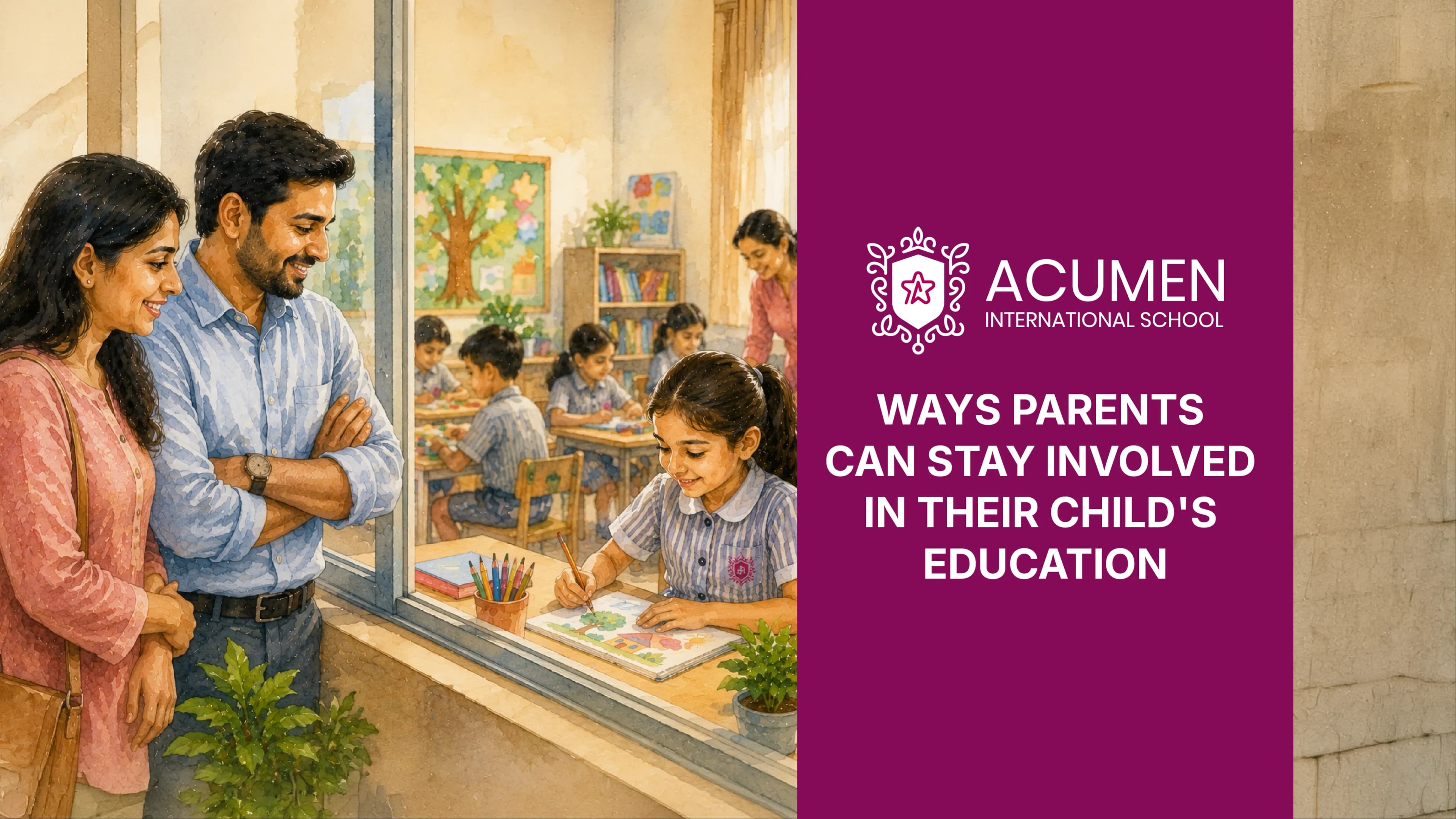
There is a point where parents slowly begin wondering if they are doing enough. It usually happens after school starts becoming a routine. Children leave in the morning, come back in the afternoon, finish a little homework, and the days keep moving.
From the outside, it can seem as though learning belongs to the school for those few hours and then quietly pauses until the next morning. But children do not really see it that way.
A conversation at dinner becomes learning. A question asked while watering plants becomes learning. Even sitting beside a child while they proudly explain something that makes very little sense can still become learning. It is strange how often those ordinary moments stay with them longer than a chapter in a book. Maybe staying involved has never been about doing more. Maybe it has always been about noticing more.
School Does Not End At The School Gate
People sometimes imagine education as something that happens neatly inside classrooms. It sounds reasonable, but children have a habit of carrying school everywhere. They bring home new words. They suddenly start asking why the moon looks different. They count stairs without being asked. They point at insects nobody else noticed.
None of these moments is planned. They simply happen because curiosity rarely waits for the next class. Parents do not have to turn those conversations into lessons. That usually makes them disappear anyway. Simply listening often does more than explaining.
There is a quiet difference between a child who feels heard and a child who feels tested all the time.
The Questions Matter More Than The Answers
Almost every parent has asked, "How was school today?"
Almost every child has answered, "Fine."
It is funny how that conversation repeats itself in so many homes.
Sometimes different questions work better.
"What made you laugh today?"
"Did anything surprise you?"
"Who did you sit with?"
Children often answer those without even realising they are talking about school anymore. Somewhere inside those stories, parents begin understanding not only what children learned, but also how they are feeling. That part is easy to overlook.
Children Notice Interest More Than Advice
Parents often worry about helping with studies, especially when subjects become harder. The interesting thing is that children are usually looking for attention before they are looking for answers.
When someone sits beside them while they finish a drawing or listens patiently as they explain a science activity, they notice it. Those moments quietly tell children that their effort matters.
Not every conversation has to end with advice. In fact, many do not need advice at all. Sometimes children simply want someone to be interested.
Learning Is Bigger Than Homework
Homework is only one small piece of education. Confidence grows somewhere else. It grows when children perform in front of others for the first time. When they lose a game, they decide to play again next week. When they build something that falls apart, they quietly start over.
Those experiences rarely appear in exam marks, but they shape children in ways that become visible much later. That is probably why schools today try to create opportunities beyond textbooks. Real life is never divided into subjects, and maybe childhood should not feel that way either.
Every Child Seems To Have Their Own Way
After spending time around children, one thing becomes difficult to ignore. They almost never learn in exactly the same way.
One child enjoys books. Another wants to touch everything before understanding it. Someone else keeps asking questions that seem completely unrelated until suddenly they make perfect sense. Trying to make every child fit into one way of learning feels a little unfair.
We at Acumen International School have always believed children deserve space to grow into themselves instead of growing into someone else's idea of the perfect student.
That is why personalised guidance matters to us. Confidence rarely appears because children are rushed. It usually grows because someone gave it enough time.
What We Believe At Acumen International School
Schools often speak about results first. We have always found ourselves thinking about something slightly different.
At Acumen International School, we want children to enjoy learning before they begin worrying about achieving. That is why our classrooms bring together the CBSE and international curriculum in ways that encourage understanding instead of only memorisation.
Our educators and child psychologists work together because education is not only about academics. It is also about helping children feel confident enough to ask questions, express ideas, make mistakes, and slowly become independent.
Across our Early Years and primary grades, children learn through stories, experiments, creative writing, music, outdoor learning, sports, technology, coding, science, art, and everyday experiences that make learning feel connected to the world around them.
When families look at student life at Acumen International School, they often notice something simple. Children are busy learning, but they also look comfortable being themselves.
That balance matters more than people sometimes realise. Many parents looking at the international and CBSE schools in Kondakal near Mokila are looking for exactly that feeling. A school where learning is important, but childhood is protected, too. We try to build that every single day.
Final Words
Years later, very few adults remember every lesson they studied in primary school. They remember a teacher who encouraged them. They remember parents who came to watch a performance.
They remember someone hanging a drawing on the refrigerator as though it was the most important piece of art in the world. Those memories have a quiet way of shaping how children see learning.
Perhaps staying involved has never meant constantly checking homework or asking about marks. Perhaps it simply means showing children that what matters to them also matters at home. At Acumen International School, we believe that when schools and families grow alongside each other, children feel that support without anyone needing to explain it. And sometimes, those are the lessons they carry the longest.