
From Classroom to Career: How International Schools Teach Real-World Skills
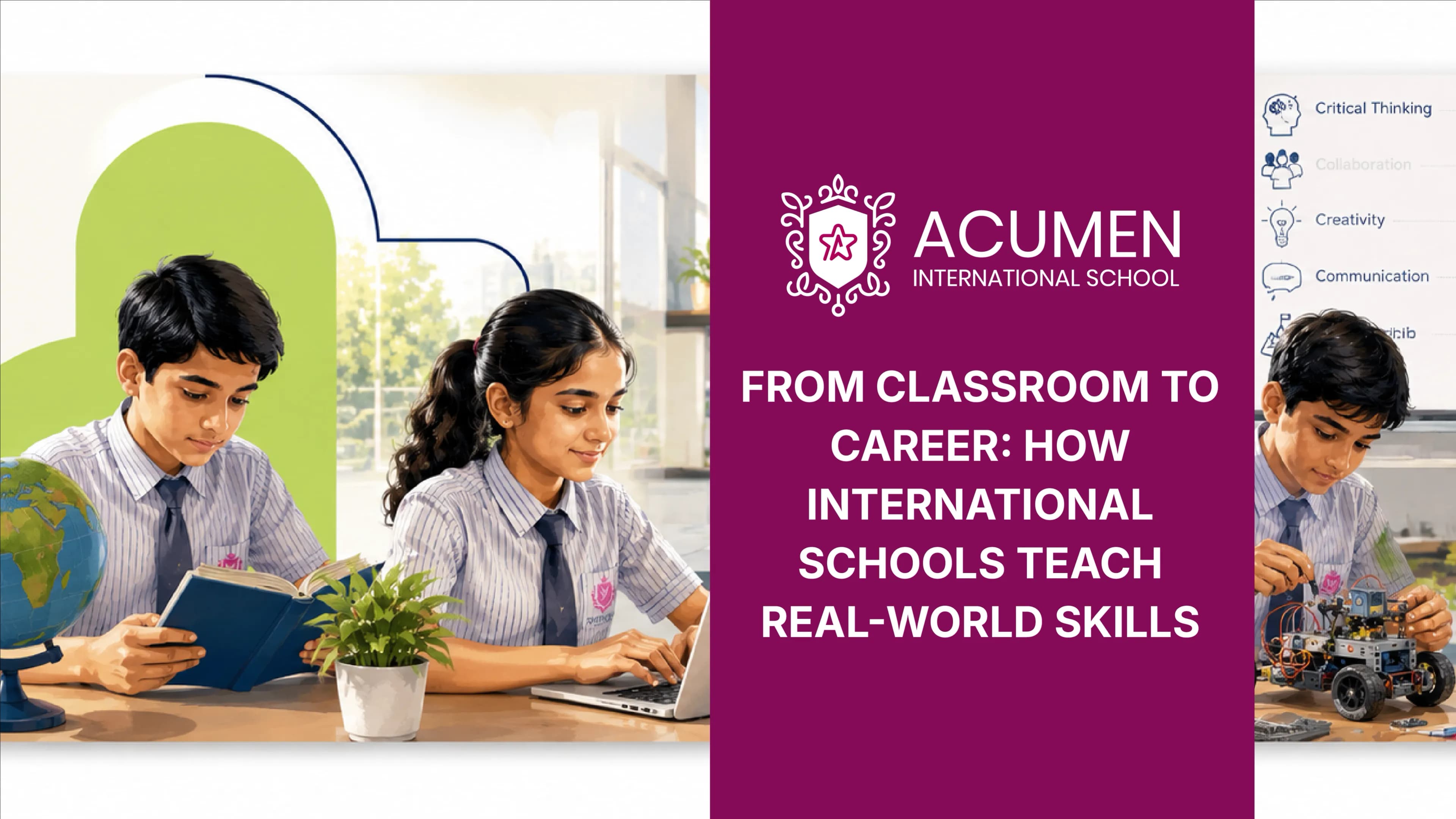
A good education is not only about getting the right answers in a classroom. At some point, children have to use what they have learned outside school. They need to speak clearly, work with others, solve everyday problems, handle mistakes, make decisions and sometimes simply figure out what to do next.
These are the real-world skills that help children become independent learners and prepare them for higher education, future workplaces and everyday life.
International schools can support these skills by combining academic learning with inquiry, collaboration, practical activities and opportunities to apply knowledge. The important question for parents, therefore, is not only what children study, but how they use what they learn.
Learning That Connects the Classroom to Real Life
Children understand an idea differently when they can actually do something with it. This approach, often described as experiential learning, allows students to apply classroom concepts through experiments, projects, activities and real-life situations.
A math lesson about measurements can become more meaningful when a child measures something around the school. Science can move beyond definitions when students grow a plant, observe what happens and talk about why it happened.
This does not mean academics become less important. Instead, academic ideas start having a practical purpose. Children begin to see that numbers, language, science and technology are not simply subjects for a test; they are tools they can use.
Communication Is More Than Knowing a Language
A child may know plenty of words and still hesitate to speak. Real-world learning gives children reasons to express themselves instead of simply asking them to memorise language. They learn to explain their thinking, present ideas, ask questions, listen actively, and adapt their communication depending on the situation.
Storytelling, public speaking, discussions, drama and group activities can make a difference here. Children learn to explain an idea, listen when someone else is speaking and disagree without turning every difference into an argument.
At Acumen International School, students have opportunities to express themselves through languages, performing arts, music, storytelling and public speaking.
Learning to Work With Other People
Most things in adult life involve other people. A project at work, a community activity or even a simple family decision rarely happens in isolation.
Schools can begin preparing children for this in very ordinary ways. Group projects, classroom discussions, team activities and collaborative problem-solving give students regular opportunities to practise these skills.
The goal is not to make every activity perfect. Children need opportunities to experience different personalities, different ideas and the occasional frustration of working together. That is how cooperation becomes a practical skill rather than simply a word in a school brochure.
Problem-Solving Starts With Curiosity
Real-world problem-solving therefore involves identifying the problem, considering different approaches, testing an idea and learning from the outcome. Children therefore need opportunities to ask, "What could be done differently?"
Hands-on activities can encourage this habit. Building something, experimenting with materials, working with simple technology or understanding why something failed gives children room to think rather than simply recall.
At Acumen International School, this approach includes coding, robotics, design thinking, applied maths and science experiments, allowing children to connect what they learn with practical situations.
Technology Should Be Used, Not Just Studied
Children are growing up around technology, but knowing how to use a device is not the same as knowing how to think with it. Digital learning becomes more meaningful when students use technology to research, create, code, analyse information, solve problems and communicate ideas.
When technology becomes part of creative work, research or problem-solving, children can experiment, make changes, see what happens and try again.
This matters because technology keeps changing. Teaching one particular tool may have limited value a few years later. Helping children stay curious and willing to learn new tools is likely to stay useful much longer.
Learning Beyond the Classroom
Some lessons make more sense once a child steps outside the classroom.
A garden can become a place to learn about plants and sustainability. A field trip can turn a familiar topic into something tangible. Even activities such as observing nature, planning a small project or working as a team outdoors can help students develop observation, communication, responsibility and decision-making skills.
For children studying at an international school in Mokila, these experiences can complement classroom learning by giving them opportunities to explore and apply their knowledge in different environments.
Creativity Has a Practical Side
Creativity is sometimes treated as something reserved for art class. It is actually useful in many parts of life.
A child who learns to write a story, build something, perform on stage or find a different way to solve a problem is practising the habit of thinking beyond the obvious answer.
International schools can bring together academics with arts, sports, music, outdoor learning and technology to give children different ways to discover what they enjoy and where they feel capable.
This is also why parents comparing international and CBSE schools in Mokila may want to look beyond the curriculum name. The daily learning environment and opportunities for practical development can matter just as much as the label attached to it.
Preparing Children for a Changing Future
No school can predict exactly what a child will become ten or fifteen years from now. The careers available then may look very different from those children see today.
What schools can do is build habits that remain useful: curiosity, communication, teamwork, independent thinking, creativity and the confidence to learn something unfamiliar.
That is where the idea of moving from classroom to career becomes less about choosing a profession early and more about developing a child who can adapt as life changes.
How Acumen International School Brings Learning to Life
At Acumen International School, we bring this approach into everyday learning through a blend of structured teaching, hands-on activities, outdoor exploration and age-appropriate technology. From the Early Years, children learn through play, nature and discovery, while older students engage with applied maths, science, global studies, coding, robotics and creative writing.
Sports, music, debate and collaborative projects also give students opportunities to develop communication, teamwork, confidence and creativity through different kinds of experiences.
What Children Carry Beyond School
The real measure of education may not always be visible in a report card. It can be seen when a child speaks up without being afraid, works patiently with another child, tries again after getting something wrong or asks a question simply because something feels interesting.
Those are small moments, but they matter. A school that makes room for them is doing more than preparing children for the next grade.
It is helping them become comfortable with the world they will eventually step into. And perhaps that is what real-world education should quietly be about.