
The Parent's Role In Homework: How Much Help Is Too Much?
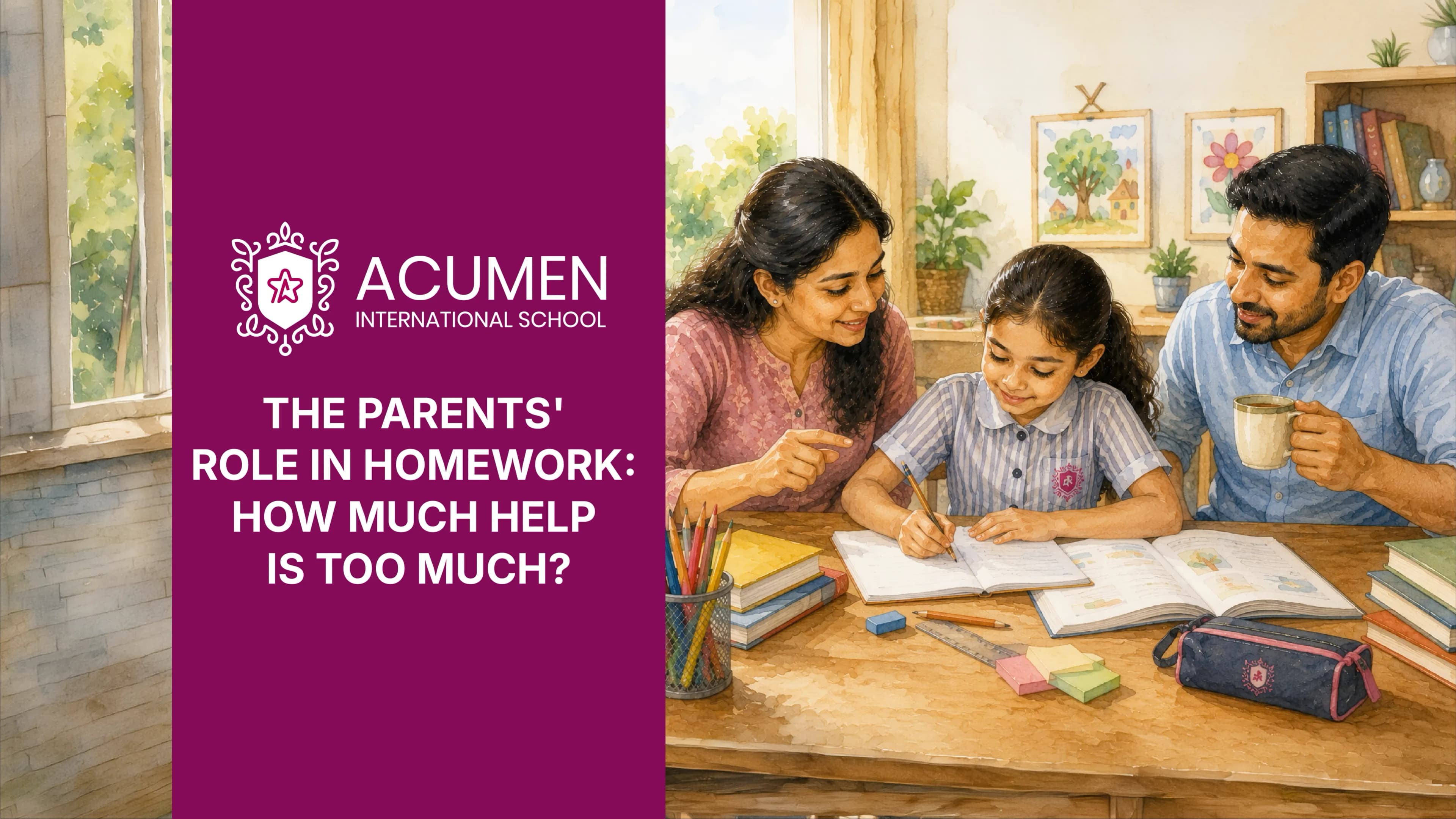
Homework has a way of changing once it reaches home. A worksheet that looked simple in the classroom can suddenly become twenty minutes of guessing, growing frustration, and a parent wondering whether to help or simply watch. It is a familiar scene in many households.
The real challenge is often not the homework itself but deciding where encouragement should end and where doing the work for the child quietly begins. Parents naturally want to make things easier, especially after a long school day, but too much involvement can prevent children from building confidence and problem-solving skills. On the other hand, leaving them entirely on their own can make learning feel overwhelming.
Finding the right balance takes patience, observation, and a willingness to let children struggle just enough to learn. There is probably no perfect answer because every child learns differently, and every family's routine is unique. Still, it is worth asking whether our support is helping children grow more independent or simply helping them finish faster.
Helping Is Not The Same As Doing
Parents naturally want children to succeed. Watching them struggle with a question can be uncomfortable. The first instinct is often to explain everything or even finish a difficult answer together. It feels helpful at the moment. The homework gets completed, everyone feels relieved, and the evening moves on.
But children notice these things more than adults realise. If someone always steps in before they have time to think, they slowly begin believing they cannot solve problems on their own. It happens quietly. Nobody plans for it. Sometimes the better kind of help is simply staying nearby.
A Little Struggle Has Its Place
The word "struggle" sounds negative, but perhaps it should not always be. When children spend a few extra minutes thinking, making mistakes, erasing answers, and trying again, they are learning something that goes beyond the worksheet itself.
That confidence cannot really be given to them. It grows while they figure things out little by little. Of course, there are days when they genuinely need guidance. That is different. Helping children think is not the same as giving them every answer.
Homework Looks Different At Every Age
Homework changes as children grow. A child working on nursery homework may only need encouragement to hold a pencil confidently or finish a colouring activity. A little conversation beside them often matters more than correcting every line.
The same is true for UKG homework. Children at that age are still building habits. They are learning how to sit, focus for a few minutes, and enjoy the process without feeling pressured.
By the time children begin homework for class 1 or move into class 2 homework, the work slowly asks for more independence. They still appreciate support, but they also need room to think before someone else thinks for them. That balance keeps changing, and perhaps that is perfectly normal.
Not Every Mistake Needs Fixing
There is something interesting about mistakes. Adults usually want to correct them immediately. Children often learn from seeing them first. If every spelling error disappears before reaching school, teachers lose the chance to understand where a child might need help. The same happens with maths or writing.
Sometimes homework correction is more useful inside the classroom because it shows teachers what children are actually understanding on their own. Parents do not have to make every page perfect. Children probably gain more from honest work than perfect work completed with too much help.
Homework Should Leave Time for Children
It is easy for evenings to become completely about homework. One worksheet becomes two. Reading turns into revision. Before long, the day feels as structured as school itself. Children still need time to play, imagine, ask strange questions, and simply be children.
Learning has never lived only inside notebooks. That is one reason we believe education should always leave space for curiosity beyond homework. Even something as simple as talking during dinner or noticing birds while walking outside teaches children to observe the world differently.
What We Believe At Acumen International School
At Acumen International School, we have never looked at homework as something children should simply complete and forget the next day. We want it to support learning, not replace it. Our educators, together with experienced child psychologists, understand that every child develops differently. Some children need reassurance, while others need gentle reminders to trust themselves. That is why we focus on personalised guidance instead of expecting every learner to follow exactly the same path.
From our Early Years programme through Grade V, we combine the CBSE and international curriculum with hands-on learning that encourages curiosity, creativity, and independent thinking. Whether children are looking at phonics, creative maths, science experiments, coding, outdoor learning, music, or storytelling, the goal remains the same. We want learning to feel meaningful instead of rushed.
Families looking for an international primary school in Mokila often tell us they want a school that values confidence just as much as academics. That is something we continue working towards every day. Many parents searching for the best international school in Kondakal near Mokila also hope to find a place where children are encouraged to think for themselves, even if that sometimes means making a few mistakes along the way. That is exactly the kind of learning environment we try to build.
Final Words
Parents sometimes wonder if they are helping enough. Perhaps the better question is whether children are slowly becoming confident enough to work without constant help. Homework is only one small part of growing up. The bigger lesson is learning to trust their own thinking, ask for help when they truly need it, and keep trying when the answer does not come immediately. At Acumen International School, we believe children grow best when schools and families work together without taking away the child's own chance to learn. Even something as ordinary as homework in Pschool can become an opportunity to build independence, one evening at a time.